The Concluding Stage of Central Business District Development: Advocating for an Eco-Friendly and Hospitable Environment
 T
The area outside the Vineyard offers a prime example of crafting a verdant and habitable space, a sentiment echoed by DOUGLAS RASBASH, urging for replication throughout the remaining Central Business District (CBD) development.
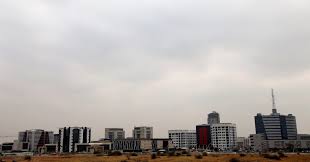
Observing the undeveloped plots southward unveils that merely 60% of Gaborone's CBD is constructed. Tower cranes, absent from the skyline, signify dwindling private developer interest. How can development vigor and CBD completion be reignited?
Spanning roughly 100 hectares, the CBD is structured on a grid system of roads and parcels for development, predominantly utilized for governmental, office, and commercial purposes. The sole exception, iTowers, integrates residential and commercial facets, rendering the CBD dormant during nocturnal hours.
Renewing the Gaborone CBD Master Plan advocates for mostly residential use on undeveloped plots, envisaging an environmentally conscious epicenter for the nation's capital.
Historically, CBD ideology fueled urban sprawl. Its initial function as the commercial nucleus now appears antiquated, fostering low-density expansion and unregulated growth, with detrimental implications. Infrastructure investments for sprawling locales proved exorbitant, amplifying car dependency, elongated commute times, and traffic congestion.
In locales like Botswana, where public transit is scant, sprawl exacerbates transportation hurdles, impeding mobility, especially for car-less residents, rendering public transport financially unfeasible.
The repercussions extend to health disparities, exacerbated by sprawling landscapes' resource consumption and limited green spaces. Socio-economic discrepancies emerge, aggravated by diminished community ties and inadequate amenities.
Unchecked expansion jeopardizes ecosystems, amplifies pollution, and accelerates climate change. As preferences shift from agrarian lifestyles to urban comforts, the essence of a CBD evolves. Technological advances diminish the need for centralized offices, fostering decentralized work models.
The concept of the 15-minute city advocates for self-sufficient neighborhoods, reducing reliance on automobiles and fostering healthier lifestyles. Urban repopulation revitalizes CBDs, attracting younger demographics and empty-nesters, bolstering economic vitality.
Embracing green initiatives and stringent environmental standards ensures CBD sustainability. Spaces akin to the Vineyard exemplify the potential for lush, inviting locales within the CBD, steering clear of congested traffic influxes.
Transitioning the CBD into a 15-minute community necessitates mixed-use developments, robust public transit, pedestrian-friendly infrastructure, localized amenities, and abundant green spaces.
By embracing these principles and the 15-minute city ethos, Gaborone's CBD can evolve into a sustainable, livable hub, emblematic of Botswana's progressive urban planning. Similar principles could elevate the Government Compound, fostering an unparalleled living and working environment.